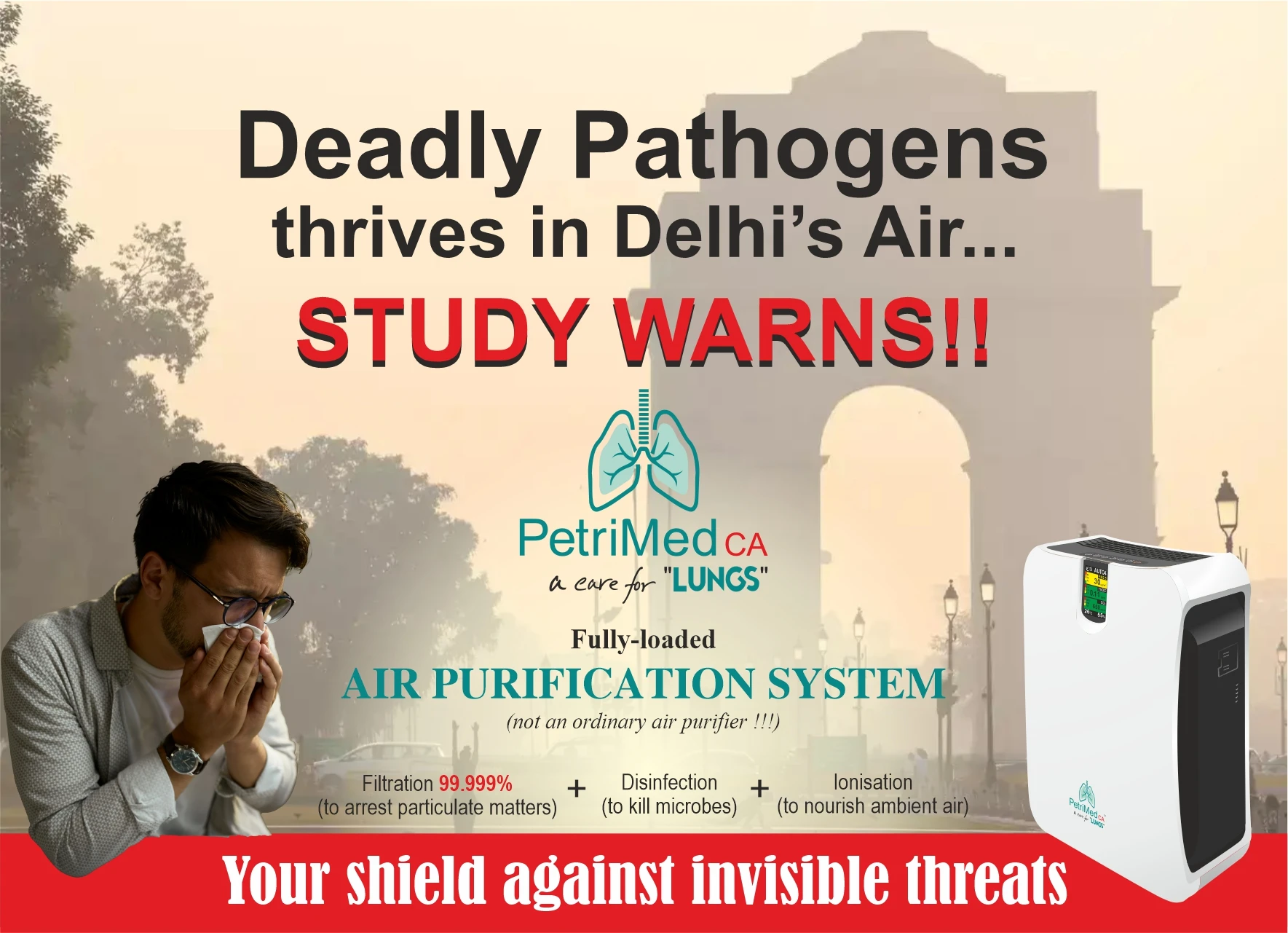
A Breath of Microbial Loaded Air: A Study Finds New Threat to Human Health in Delhi
16 Sep 2025
Delhi, the capital of India, has long been plagued by high levels of air pollution. From vehicle emissions, dust to industrial waste, the air in the city is loaded with harmful contaminants that affect millions of people living in Delhi and nearby cities. However, a recent study by scientists from the Bose Institute has revealed an alarming new finding—airborne pathogens and bacteria are circulating in Delhi's air.
The study states that during the winter months, western disturbances lead to a drop in temperatures and a rise in humidity that causes pollutants becoming trapped in the air layer close to the ground. This creates a perfect storm for the accumulation of PM2.5 particles that carry harmful pathogens, raising the risk of infections.
This groundbreaking research is a wake-up call to the urgent need for indoor air purification solution to fight these invisible threats.
The Bose Institute Study: Unveiling Airborne Pathogens in Delhi's Air
The study, published in Atmospheric Environment: X and led by Dr. Sanat Kumar Das of the Bose Institute, a prestigious research organization in Kolkata, recently steered a comprehensive study on the quality of Delhi's air. Their conclusions were shocking: numerous types of harmful microorganisms were found in the air we breathe. The study identified a wide range of pathogens, including bacteria known to cause infections in the lungs, gut, mouth, and skin due to the high concentration of PM 2.5.
"PM2.5 -- the microscopic dust specks help bacteria to hitch a ride through the city air," stated the researchers, led by Dr. Sanat Kumar Das.
“Since the particles are small enough to sneak deep into the lungs, they act as carriers of the pathogenic bacteria, thus spreading the infection to different parts of the body,” they added.
These airborne pathogens are not only a concern for individuals with pre-existing conditions or weakened immune systems but also pose a threat to healthy persons, particularly in a city with such high concentration of air pollutants.
Health Risks of Airborne Pathogens and Bacteria
The potential health risks of getting exposed to airborne pathogens include the following health risks:
• Respiratory infections (coughing, wheezing, and shortness of breath)
• Allergies (runny nose, sneezing, and itchy eyes)
• Long-term diseases such as asthma, bronchitis, and even heart problems
• Health risks for children, the elderly, and people with weakened immune systems
While it is impossible to take control of outdoor air, protecting indoor environment is important in minimizing exposure to harmful airborne microorganisms and contaminants.
Taking Control of Indoor Air Quality
Clean air is not a luxury—it is critical for health and wellness.
The researchers at Bose Institute call for an urgent need to adopt sustainable air purification solutions to keep indoor ambient air clean and safe. While environmental changes are essential in today’s challenging time, individuals can take easily take control of their indoor air quality in their homes and workplaces by using a medical-grade air purification system. They are engineered to significantly arrest harmful pathogens and indoor air pollutants, creating a safer and healthier living environment.
For those looking to improve their indoor air quality, PetriMed CA Air Purification System (Model No. APS-400) offers a consistent solution using anti-bacterial pre-filter, pre-activated carbon deodorizing filter, HEPA H14, bi-polar air ionizer, and UV-C.